Tuesday, 21 June 2016

8 Really Important Things To Know When Starting Out


Whether you are starting your financial journey out of Uni, getting your first job, climbing the career ladder, jumping into a relationship, buying property or starting a business, you need to take control of your financial future. Here are 8 really important things to know when you are starting out.
One: Live without a credit card
Did you know that Australians owe approximately $32,673,480,146 in credit card debt as of this morning. Here’s an easier number: Thirty-Three Billion Dollars. Personal debt per credit card holder is $4301.00 with an average of $723.45 in interest per annum. Yikes!
For many of us refusing to use a credit card is simply not an option. Without one it’s difficult to pay bills and even make reoccurring payments. So use it for that and not for shopping. What should you use for shopping and spending I hear you murmur sarcastically? Use a debit card. You can’t spend more than you have in the bank that way. You’ll find you will spend less and when you next look at your bank statement you’ll even question what you are buying and maybe start to budget.
Two: You don’t have to keep up with the Joneses
Keeping up with your peers is dangerous. Just because they have the latest model of car or go on the holiday that you’ve always wanted to, doesn’t mean you should too. You don’t know what their situation is: they may have inherited some money, or they may be so far in debt that you don’t want to follow. You are you, they are they, don’t get confused with that. Live within your own financial means not your peers.
Three: Choose your partner very carefully
Business or personal partner, this is relevant to both. Don’t be impressed by a showy display of money or wealth, it may just be a façade and have a bucket load of debt supporting it. Be careful and be aware. When a business starts making money it’s very tempting, particularly if it is a new concept to your partner. There are so many horror stories of partners who get all consumed by newfound wealth and blow it all. Money can bring out greed in a person… very easily. Keep your finger on the pulse.
Four: Start Saving
More than 40% of a recent survey said they were able to meet their normal monthly expenses, but a third admitted they were worried about their ability to do so. The report said that the results clearly showed there are a large number of people who struggle to cope financially, and the problems are not always linked to the size of their pay-cheque. In many instances people are living in the hope that they will achieve their goals rather than planning for a fulfilling and secure future.
57% of those surveyed had no regular savings plan, and peaked among 45 to 54 year olds, who are often nearing the peak of their earnings capacity. Close to 40% of people would be unable to maintain their current lifestyle if they lost their income for three to six months, thanks to not enough savings.
So how do you counter that? Put a simple budget in place, as you never know when your financial situation can and will change. We like to call it Your Spending Plan as that is what we are all working around: Spending.
Five: Develop a budget
Don’t spend more than you earn. It’s hard to keep track of spending if you don’t have a budget. Putting a simple budget in place lets you know what you have to spend, and what you don’t. We like to call a budget a Spending Plan as that is what we are all working around: Spending.
Six: Get yourself health insurance
Without health insurance, you may not be able to afford expensive medical services when you need them but there are many more reasons why you need health insurance: Shorter waiting periods for elective surgery, choice of doctor, extras benefits to name a few.
You could end up paying more for private health insurance over your lifetime if you don’t take out hospital cover before 1 July following your 31st birthday. If you join after this time, you may be required to pay a 2% loading on top of your premium per year for every year you are aged over 30 and do not have private hospital cover, up to a maximum loading of 70%. For example, if you take out private hospital cover at age 45 you may pay 30% more than someone who took it out at age 30.
Do you really want to be significantly out of pocket when you are sick?
Seven: Keep track and set some goals
If you don’t know where you are it’s often hard to know where you are going. Hopefully you establish your budget, then revise and review. Your budget is a living document, it keeps changing so you need to keep assessing and adapting to these changes.
Put some realistic goals in place and try to stick to them. You’ll benefit in the long run.
Eight: Understand Superannuation
If you want enough money for a comfortable retirement, spend some time learning about superannuation. Taking a few steps now to boosting your Super will make a huge difference to your lifestyle in the future.
Superannuation is a way to save for your retirement. The money comes from contributions made into your super fund by your employer and, ideally, topped up by your own money. Sometimes the government will add to it through co-contributions and the low income super contribution.
Your employer must pay 9.5% of your salary into a super fund. This is called the Super Guarantee and it’s the law. The Super Guarantee will gradually increase to 12% in coming years.
Over the course of your working life, these contributions from your employer add up, or ‘accumulate’. Your super money is also invested by your super fund so it grows over time. When you retire, you will have money to live off – a nest egg. Super is a lifetime investment that has many benefits. Super can be a minefield of information so ask an expert for help, It’ll save you money in the long run.
So if you are starting out on the career path, in a budding relationship, a new business or “it’s just time”, get a grip on controlling your overall financial situation. Here’s a great Free e-book from Your Money Sense6-steps to Financial Security It’s a good starting point to get you in the right mindset when you are starting out.

Tuesday, 7 June 2016

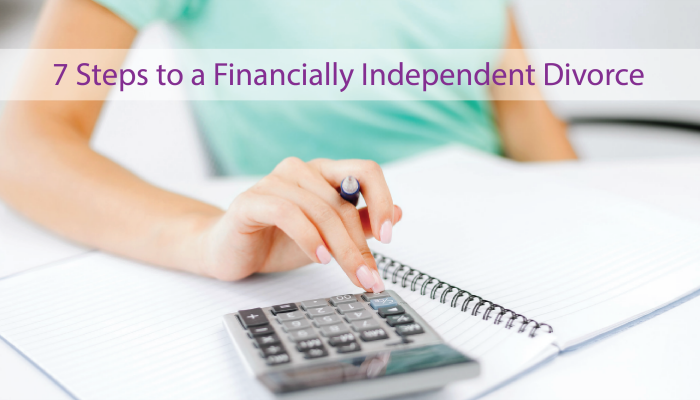
7 Steps to a Financially Independent Divorce


Are you a single parent? It’s more common than you think. The first thing to accept is that you are now financially independent, or need to be. At first that can seem overwhelming, particularly as a single mum. Just understand that there is plenty of help out there if needed. There is such a great network of support through women in business networking groups on Facebook and LinkedIn. And they really are very supportive and helpful with lots of personal experience to tap into.
Get out and live your life, personally and in business. Embrace your kids, activities, the city, and financial opportunities. And take control of your finances; understand them and rework them to suit your new lifestyle.
Here are 7 financial steps to get you back on track after divorce:
1: Embrace that you are now financially independent. Yes, you may be eligible for child support, but also remember this, you may not end up getting it. But you can control how much you earn, and you can earn far more than a judge may order you be paid. It’s also very important at this stage to move on emotionally in this phase of your life; don’t rely on someone else.
2: Set some short- and long-term financial goals. In the short-term you may need to pay off a credit card bill, build an emergency savings account, or simply put; make more than you spend. Your longer term goals may include buying a home, saving for your kids’ college, or investing for retirement.
3: Set quality of life goals. There is no point in paying off a credit card bill if it means you work so much that you never see your kids or have time to exercise. Consider free time, quality time with your family, for their health and well-being. Think about how your money and life can work together.
4: Decide to make more money. Take a mentor, someone you know is doing it well, out for coffee to learn about opportunities in your profession. Research about doing further study. Consider starting your own business. Talk to your boss about working from home and other life-balance arrangements.
5: Get rid of bills for stuff you don’t need. Haven’t been to the gym in six months? Get real with yourself and cancel that bill. Look at your mobile phone and cable bills – can you trim down your services?
6: Go on a shopping diet. No more trips to the shopping centre to browse, on or offline. Make a strict list before stepping foot there, and do no stray into the cosmetics department for a “treat” no matter how good a deal it is! By making each purchase a conscious one, you will feel empowered and confident about your money.
7: Give yourself a break. Getting back on your feet after a divorce can be a long process full of setbacks. But this can also be one of the most exciting and empowering times of your life.
For most single parents, their lifestyle will be different from the past because of their changed financial circumstances. Try not to dwell on the past, and how different it may have been, because it will just eat away at you emotionally.
Build a financial plan that outlines your assets, income streams (from investments and working) and obligations (debts, living costs etc). Calculate a cost of living figure and come up with an amount that represents the weekly, monthly and annual commitment. If there is a gap between cost of living and income (wages, investment income and government entitlements) then develop a plan to plug that income deficit.
Here’s a helpful downloadable guide to take back control of your financial situation. 6-steps to Financial Securitya Free e-book from Your Money Sense. It’s a good starting point to get you in the right mindset to manage your money.

Tuesday, 31 May 2016

A Husband is not a Retirement Plan


Unfortunately most women will face immense challenges as they reach retirement due to an imbalance in superannuation savings between men and women. The gap between men and women is said to be approximately 46% which leave many women reliant on their spouse and/or the age pension in retirement.

Why is there such a gap in savings for retirement between the genders? That is a broad answer but can be mainly attributed to these factors: career opportunity; more women in part-time work; women are working less hours than men; earlier retirement; and unfortunately the ever increasing reason:- Divorce. Most females will succumb to one or all of these factors in their work lifespan.

Women, often commonly referred to as mums, are generally the primary care-givers in the family so this cuts into their career opportunities, length of working life, and therefore their earnings potential and super contributions as a result. That’s fine if you have planned for this when you and your spouse retire. But what if your relationship doesn’t go the distance?

Whilst divorce rates have decreased ever so slightly over the past few years, the rate is still 1 in 3, meaning it is more likely for women to end up single prior to retirement, or not being able to retire at all. If you are one of the fortunate ones who stick it out, or even better truly love and trust your partner, then you will be in a situation of mutually funded retirement. Congratulations.

Not wanting to spread doom and gloom here to the female population but women tend to outlive men so your planning needs to take into account that alone time, personally and financially too.

There are so many variables as to why the female population may end up short-cashed in retirement, and it’s ok, really. You just need to plan ahead. Think about the what-ifs: What-if you don’t earn enough to generate enough Super, what-if your partner does leave this world prior to you, or what-if your relationship doesn’t make the distance?

Plan, plan and more planning. You need to establish your our financial retirement identity and plan. Here’s is where I can help: My name is Karen Vickers and I am a single mother who has faced many of the challenges above. I am also a financial adviser with many female clients and I am passionate about helping and educating women to take a hold of their own financial future. If you need any help with establishing a personally financial secure future, please do not hesitate to connect with me at ARC Wealth and we can discuss it confidentially.

If you want to start with some self-education then here’s a helpful downloadable guide: 6-steps to Financial Securitya Free e-book from Your Money Sense. It’s a good starting point to get you in the right mindset to manage your money and build your own retirement nest-egg.

Tuesday, 24 May 2016

Overspend once in a while, it’s good for you.


Imagine going to the shopping centre on Saturday and buying whatever you want: An iWatch, or even a new iPhone, that handbag you keep eyeing off as you walk past the store, a new jacket, or the latest sports shoes. Put it on your credit card, or split it over two credit cards, then it won’t seem as bad when you look at the statement.
We’ve all done it and it feels good. Coming home with bags of goodies, trying them on in secret, then when quizzed weeks later “When did you get that?” you retort “This old thing”. Haha, they’ll never know. Surely you’ve heard the old saying that “You live up to your income”, as your paycheque or income rises, so does your lifestyle. There’s nothing wrong with living well.
But, and there is always a But… that one-off spending spree is very rarely a “one-off”. It is addictive and gets the pleasure endorphins pumping. “Why not do it again, next week, it was fun and there’s still credit available on the card” And on top of all that the airlines are giving you reward points! Why wouldn’t you use your card?
Did you know that Australians owe approximately $32,673,480,146 in credit card debt as of this morning. Here’s an easier number: Thirty-Three Billion Dollars. Personal debt per credit card holder is $4301.00 with an average of $723.45 in interest per annum. Yikes!
For many of us refusing to use a credit card is simply not an option. Without one it’s difficult to pay bills and even make reoccurring payments. So use it for that and not for shopping. What should you use for shopping and spending I hear you murmur sarcastically, Use a debit card. You can’t spend more than you have in the bank that way. You’ll find you will spend less and when you next look at your bank statement you’ll even question what you are buying and maybe start to budget.
While you’re at it, have a look at your monthly credit card statement. It shows how long it will take you to pay off your balance and how much interest you’ll pay if you only pay the minimum each month. (The short answers are “forever” and “heaps.”)
So overspending once in a while is good for you; hopefully it shows you how addictive it can be and gets you to review the financial consequences of that binge. Although a “once-off” may not impact you that much now, think about those endorphins that are working to create a monster, and there’s nothing more destructive than a spending monster. What about all that money you are spending on short term pleasure, and could be using toward the car, or house, renovation, holiday: the big ticket items that need saving for. Shame as those would be long term memories, not just a Saturday of short term pleasure.
What can you do to resist the “spending-money-I-just-don’t-have” urge?
Firstly use your debit card more than your credit card. Secondly put a simple budget in place, and then you’ll know what you have to spend, and what you don’t. We like to call a budget ‘Your Spending Plan’ as that is what we are all working around: Spending.
Here’s a helpful downloadable guide to control your spending and build your savings. 6-steps to Financial Securitya Free e-book from Your Money Sense. It’s a good starting point to get you in the right mindset to manage your money.
So next time to go for a bender at the shopping centre, take a few deep breaths before walking in and think about the long term financial goal.

Tuesday, 17 May 2016

And the Survey Says . . .  One in Five Aussies don't have enough savings.


An Ernst & Young survey of almost 5,000 people, commissioned by BT, found that 17% of people would struggle to find $500 to $1,000, while 30% had no money left over for savings.
It claimed that almost one in five Australians would struggle to come up with $1,000 to cover an emergency expense, while one in three people live from paycheck to paycheck, spending everything they earn, according to the survey.
More than 40% said they were able to meet their normal monthly expenses, but a third admitted they were worried about their ability to do so. At time of publishing the report it was said that the results clearly showed there are a large number of people who struggle to cope financially, and the problems are not always linked to the size of their pay-cheque. In many instances people are living in the hope that they will achieve their goals rather than planning for a fulfilling and secure future.
57% of those surveyed had no regular savings plan, and peaked among 45 to 54 year olds, who are often nearing the peak of their earnings capacity.
Close to 40% of people would be unable to maintain their current lifestyle if they lost their income for three to six months, thanks to not enough savings.
So how do you counter that?
Put a simple budget in place, as you never know when your financial situation can and will change. We like to call it Your Spending Plan as that is what we are all working around: Spending.
Here’s a helpful downloadable guide to control your spending and build your savings. 6-steps to Financial Security, a Free e-book from Your Money Sense. It’s a good starting point to get you in the right mindset to manage your money.

Tuesday, 10 May 2016

Are you a shoebox culprit?


So what is it? It’s the practice of throwing everything that might be important, like invoices and receipts, into a box and giving it to your accountant to sort out.

When someone refers to the “shoebox” in relation to your accounts or finances it means that the person has procrastinated doing their accounting by simply dumping the paperwork into a single place (better than scattered, but only barely) and deciding that they will address it at a later date, at which time it will likely be too late to fix any problems and bills which may be incorrectly billed for example. The implication is that the business suffers as a result because performance isn't being measured and problems aren't being addressed.

The other implication from the accountant's perspective, or even yourself if you are doing your own accounts, is the time to sort it all out can quadruple compared to being given all that information in order; say date order.

So how do you avoid becoming a shoebox culprit? You may enter your invoices and receipts into myob or xero yourself, or have a book keeper do it or hold it all for your accountant to do. Whatever your method is, a little foresight and time attention goes along way; both in time and cost. It’s as simple as buying a ring binder and hole punch. When you get a bill or receipt, punch it and stick it in the folder. Get into a routine of doing that every day or at least once a week. It will take discipline but will also save some serious headaches, and potentially financial losses, at tax time.

A good start to managing your financials is by downloading our Free Your Money Sense e-Book: “6-steps to Financial Security”.

So, are you a shoebox culprit?

Wednesday, 4 May 2016

What is Purple Rain?


It could well be the tears of regret that potential beneficiaries of Prince’s are shedding having missed out on a slice of a $300 million dollar fortune. This kind of shows the importance of having a Last Will and Testament in place. Not everyone will die at 82-1/2 years old (average Australian lifespan) so it’s best not to wait until then to set up your will.

Having grown up with Prince’s music, yet not really following his career, I recently read his biography in Rolling Stone and was blown away at the artistry and creativity of this musical legend. His career was constant from his first days of self-learning piano at the age of 7, guitar at 13, and drums at 14 to his last days, still writing and performing.

Wow, no wonder he had no time to get his affairs in order. Maybe, being so ensconced in his career and creativity, he didn’t have or allow managers or financial advisers around him to insist that he did get his fortune sorted. We may never know why Prince left it all that way, but we must take a lesson from that and ensure we do get our own affairs in order.

A step before setting up your will is to get your finances organised. There is no point leaving your loved ones a mess to sort through, or god forbid fight over. This can be as easy as establishing a simple budget to follow each month, or even enlisting the help of an accountant or financial adviser. If you don’t already have a financial plan, or as we often like to refer it, a “spending plan”, you can start it at any time. That way you can see at a glance, what you are spending, saving and investing (if you get to that stage).

I won’t go into it here but it’s quite easy to avoid the Purple Tears of regret and get yourself sorted and setup financially, for the benefit of your loved ones.


A good start to understanding the savings/spending process is by downloading our Free Your Money Sense e-Book: “6-steps to Financial Security”.