Showing posts with label help managing finances. Show all posts

Monday, 16 July 2018

Australians Addiction to Debt is at a New High


When house prices are strong, household spending is also often high. Home owners think they are sitting on the golden egg, so they just keep spending.

When house prices drop, so should spending. But as we have seen in the past 6 months, housing prices have come off the boil, yet consumer spending is at an all-time high.

Are we in a property bubble? Probably not.

Will there be a crash? Probably not.

You need a bit more than a cooling off of Chinese investors to crash a property market. Factors like a depression, massive unemployment, exceedingly high interest rates, and an excessive oversupply of properties also need to be in play. They’re not.

So, although a crash is not on the horizon, the drop in the value of ‘Your Castle’ should give you cause to ease off your spending.

The Australian Bureau of Statistics says that “if their debt is either three or four times more than their income, or 75% or more of their assets value”, then a household is over-indebted.

Two-thirds of Australians’ debt is secured by their property. So, if your spending keeps increasing, yet your property value drops, you’re actually in a position of borrowing too much. And there will come a time when you need to reign it in. Probably sooner than later.

But managing your spending is easier said than done, right? Firstly, because not many of us know how to create a budget to check just how bad our spending may be. And secondly because it’s easier to ignore it.

Budgeting should be your fundamental starting point to make sure your spending is in control. After all, how can you tell you’re on track if you don’t know where your hard-earned pay-cheque is going?

Some of us, correction: most of us, will find it daunting to maintain a budget. Getting all your expenses together, tracking what should be paid and when, how much you have left for entertainment, saving for long-term goals – it’s enough to make you give up before you start. But what if there was an easier way to manage your cash-flow that didn’t require hours of sifting through receipts or crunching numbers?

Online spreadsheets and budget are a challenge, for anyone. Where do you start, what does this mean, what does that mean? What goes here, what goes there.

Let me help you there. Here is a link to Your Spending Plan as built by a Sydney based company, Your Wealth Vault, which educates people through the process of setting up a personal budget.

They have built an easy to use Course which guides you through the important steps to making a budget, and half way through you’ll have your fully functioning Spending Plan, just by way of following through the quick and easy course.

You’re probably thinking that all sounds too easy, there must be a catch.

There is no "catch", but there is a charge to use this ground-breaking money-saving software. Good thing is it’s no more than the cost of a few cups of coffee a month, or a bottle of wine, and way less than a few hours parking at a Sydney beach.

If you are serious about getting your finances organised and knowing exactly what is coming in and what is going out, then start the Course and create Your Spending Plan. You can always easily cancel if you feel it’s all too hard and life can get back to “overspending normal”.

SO start here >> Your Spending Plan

Wednesday, 10 January 2018

3 Quick Ways To Cut Your Credit Card Debt


I’m sure you are all aware of the number one way to reduce credit card debt: Pay it in full whenever you get your statement. And the second piece of common advice about managing credit card debt: Don’t use it. Easier said than done sometimes.

Even the most organised amongst us may feel like we’re spinning our wheels sometimes when it comes to credit card debt, and the situation isn’t helped by the fees and interest rates often charged by credit card companies

With around $32 billion owing in Australia, that's an average of around $4,300 per card holder. The level of credit card debt can go up or down depending on what the trend is on a monthly basis but the average card holder is paying around $700 in interest per year if their interest rate is between 15 to 20%. And as we know most of the card interest rates are more than that.

Somehow, it feels a lot easier to get into debt than dig yourself out of it. But here’s the thing—have you actually asked your credit card issuer to see if they’re willing to change the terms of your credit card so that it tilts a little more favourably in your direction?

Odds are, if you’re like a lot of people, you haven’t even tried. We constantly receive offers for new credit cards by mail and email, and the more in debt you are the more offers you will get. Banks are falling all over each other to get new customers and keep the ones they have. So if you have an outstanding balance, maybe you should try negotiating more favourable terms for paying it off. Yep, really.

So here are 3 Top Tips for getting your credit card balance paid off quicker.

1. Will You Waive My Late Fee?

Sometimes we just forget to do things. With all the best intentions in the world and even a diarized note, you still forget. When you forget your due by date on your credit card payment there is no forgiveness, you get slogged bad.

But card issuers may actually be more merciful than you think. A growing number of banks will waive the first late fee if you ask.

Having a pristine record of paying on time and a legitimate excuse for dropping the ball (for example, an illness or family emergency) may also increase your chances of getting the fee forgiven. Just don’t make a habit of calling and asking for forgiveness, you will be on record and your credibility and the bank’s kind attitude could dry up fast.

2. Can You Lower My APR?

Ask for a lower annual percentage rate (APR), but do your homework first. Keep a file of all the offers that come through the mail box, and an email folder of the offers that come through digitally from other credit card providers. When it’s time to ask for a lower rate, have your facts and figures of current comparisons on hand and use them as a baseline for your conversation. “XYZ credit card offered XX% and my rate is X+Y%. Can you match that?” Be nice and polite, but be direct and assertive as to what you want.

Typically a bank may offer to knock off 2 or 3 percentage points, but it’s okay to ask for a little more than that. You have every right to make these requests, just as long as you are nice and polite.

If you carry $5,000 of credit card debt at 18% interest that you pay down at the rate of $100 a month, it’ll take you almost eight years to pay off that card. But if your interest rate is 15%, it’ll take you about six and a half years. While you’re at it you might want to work out how much you’d have to pay each month to pay off your balance in five years… or less! It’ll be worth it in the long run.

3. Can I Change My Payment Due Date?

If you find you’re more likely to pay your balance off in full at a certain time of the month rather than when the credit card company expects you to, consider asking your provider to change your due date to a day that’s more convenient for you. That’s not an unreasonable request.

Everyone has different ebbs and flows with their money and when different bills and payments are due. The date you get paid influences when you have money available for payments. If you get paid once a month on the first of the month, it’s probably a lot easier to have your payment due earlier in the month rather than later, after you’ve spent your money on other things. A lot of times a bank might work with you to change your payment due date; it’s all about making payments on time every time.

Just be aware that if you carry a balance and you’re pushing your due date out, from the 1st to the 15th, you’ll be paying finance charges on those extra days that your balance would be accruing interest during your first changed billing cycle.

So you can see there are a few genuine ways that you could realistically reduce your credit card debt. If you’re still having a problem, find another credit card provider and transfer the balance – they’re always offering that.

Taking control of your credit cards is just another step in the process of controlling your overall financial situation. 

Take the Free Your Money Personality Quiz to find out your emotional attachment to money and how to overcome and manage it.

Your Money Sense is an online financial education program where you’ll learn how to take control of your money, step-by-step, identifying where you can save and where you can spend without blowing the budget.

Our proprietary budgeting tool, Your Spending Plan, guides you on how to budget, and you’ll easily learn everything you need to know to manage your money to make confident decisions.

Monday, 20 November 2017

8 Online Scams To Be Very Aware Of This Christmas

We’ve all heard about the Nigerian Prince who needs to transfer money out of the country and has selected us to send it to. Haven’t we? Phone and internet scams are all around us, in fact, they're so common that the ACCC recorded more than 105,000 scams a year, which resulted in losses of more than $84 million. That's only the ones that were reported: many more went unreported, often because the victim was too embarrassed to do so.

So to help you be on the lookout for, and hopefully avoid falling into their blackening pit of online deceit, we've put together a list of 8 most common scams.
1. The Urgent Transfer
What it looks like: You receive an email from a friend, family member or senior staff member telling you they need urgent access to funds. The story adds up (they're probably overseas and short on time). Besides, it comes from their email address and looks authentic. 
What's really happening: Their email account has been compromised and you're transferring your money straight into the scammer's bank account.
What can you do to avoid it: Do not reply to that email. Create a new email to that friend and ask them if they are ok, or if you can, privately message them on social media to confirm their status.
2. The Mail That Never Came
What it looks like: That credit card you applied for never seemed to arrive.
What's really happening: Scammers accessed your letterbox and intercepted the card before you had a chance to receive it. They've changed the PIN and are now using it for themselves. In the process, they're racking up a significant debt in your name. And its not just your credit card mail they will take.
What can you do to avoid it: Put a lock on your letterbox, or use a PO Box, or at least check your mailbox regularly.
3. The Parcel Pickup
What it looks like: A postal delivery company sends you an email telling you that you have a parcel that can't be delivered. If you can't collect it within 7 days it will be destroyed. But first, you need to print off a label to redeem your package.
What's really happening: Rather than printing a label, you're actually downloading dangerous ransomware. Once it's installed, scammers can use it to lock files and even destroy them. The only way you can take back control is to pay them. Making sure your computer is regularly backed up can also help counter-effect the impact of ransomware.
What can you do to avoid it: This one is really scary as all you can do to get back control of your computer, and files, is to pay them. Think before you click on anything you aren’t sure of: Are you expecting a parcel? Why would it not have been delivered? Pick up the phone and call before clicking.
4. The 'Free' WiFi
What it looks like: You're at the airport or hotel and need to connect your laptop or mobile to the internet. When you search for a connection, you're in luck. There's a free hotspot right nearby.
What's really happening: You've actually just connected to a fake network. This allows a scammer to intercept all network traffic and steal your personal information. And the pain doesn't stop there. From now on, every time you turn on your device, you could be transmitting the same 'free' wifi to other unsuspecting users.
What can you do to avoid it: You should only connect to wifi that you know is legitimate and, if in doubt, pay to access a secure network. You should also make sure your anti-virus software is up to date and your firewall is turned on.
5. The Unrealistic Job Offer
What it looks like: You respond to an advertisement that promises you'll earn good money from the comfort of your home as an 'accounts processor'. All you need to do is set up a bank account and forward any money that comes into it, onto another account. You even get a cut of each transaction for your troubles. 
What's really happening: You're being used by fraudsters as a “money mule”: an everyday person with no criminal history through whose bank account they'll move the proceeds of crime.
What can you do to avoid it: This is money laundering, done by organized crime, and you can be implicated and go to jail. Easy money doesn’t exist. Check, research, and qualify before you go the easy route.
6. The Speeding Fine
What it looks like:  A government body/law enforcement agency, emails you to tell you that your vehicle has been caught speeding. You need to download the photo they've taken to confirm you were driving.
What's really happening: The link you click on downloads ransomware to your computer. You'll have to pay the scammers to get back the files they encrypt.
What can you do to avoid it: Same as #3, this is hard to back out of and will end up costing you a lot of money. Do your research before you click on things you are not sure of.
7. The Computer Problem
What it looks like: You receive a call from your internet service provider. They've detected a virus on your computer and it's sending error messages. The good news is that they can fix it, so long as you give them remote access.
What's really happening:  You've handed control of your computer to a scammer. They'll probably try to steal your personal data or hold your computer to ransom until you pay.
What can you do to avoid it: Never hand over remote access to anyone! If it’s that bad, take it to the service providers storefront and ask them about it.
8. The Store Voucher
What it looks like:  A well-known brand uses its social media account to post that it's giving away gift vouchers or free flights or another very attractive perk. To claim your prize, all you need to do is like the post. Like this photo, or share it if it tugs on your heartstrings, or type Amen then share, or type the solution then like.
What's really happening: You've fallen victim to a 'like farming' scam. The page isn't authentic but has been set up by a scammer who's trying to get as many likes as possible. They'll on-sell these likes - and your profile - to other fraudsters, who will start pushing spam posts in an effort to get hold of your credit card data.
 What can you do to avoid it: Oh this is so common! If it’s not a friends post or a known source, stay away, don’t get sucked in by emotions or because you think you are clever enough to know the answer.
AND THAT’S JUST THE BEGINNING . . .
As the world becomes alert to the prevalence of scams, scammers are responding by becoming more creative. So, as these 9 scams start to become less effective, it's likely that newer and more sophisticated ones will take their place.
RULE OF THUMB
Email: Don’t open or download any links or attachments that you are unsure of. Research them prior to doing so. Get on the phone and check the source.
Some emails may seem to come from a reputable name, EG: YourFriend, but when you right-click on that ‘from name’ you will find the real source, EG: YourFriend <dodgysource@evendodgiercompany.com>
Social Media: Only respond to known posts – friends and businesses that are familiar to you.
------------------------------------------------------------------
This list was prepared by Your Wealth Vault, an online financial education program where you’ll learn how to take control of your finances, step-by-step, identifying where your money is coming from and where it is going. It’s called cash-flow budgeting.

Take your FREE Money Personality Quiz to see how your money controls you. 

Wednesday, 1 November 2017

The #1 Cause Your Spending Gets Out Of Control?

Sometimes it just doesn't take much for something to trigger an out of control wobble, right? Could be the kids, could be work, could be your partner, or a multitude of other reasons.

Do you know what the number one cause of losing control is? What gets us anxious?

It's Money.

Do you control your money or does it control you?


Whether you are starting your financial journey out of Uni, getting your first job, climbing the career ladder, jumping into, or out of a relationship, buying property, or even starting a business, you need to take control of your financial future.

There are a heap of 'Manage Your Money' APPs and Software Platforms out there now.

They're a fantastic start for anyone that doesn't have control over their money.

They scrape your bank accounts and show you what you are spending and categorise that spending, so you roughly know what you are spending your money on.

Better to know than not to know, right?

These Apps aren't really going to let you get ahead, or save, they just help you to not overspend.

Now if you are really serious about getting on top of your money, you need to be preparing a budget of your cash-flow.

But no-one wants to create a budget. That's way too hard. Unless . . .

Your Spending Plan from Your Money Sense is a budget planning tool, stepping further into managing your spending categories than the account scraping APPs, in order to save you real money, and put more in your pocket, and even get you saving for those bigger purchases or life-event needs.

It's a step-by-step module course showing you how to gather, categorise and act on your expenses and make real savings.

Your Spending Plan is not an automated scraping tool, like the multitude of APPs out there, as the information needs to be accurate and detailed.

I won't sugar-coat it, there is manual entry required to get it started so you will need to gather your bills and expenses together.

One of the great things about the Your Money Sense course is that it guides you through each step like an easy course, so you know what to do and have plenty of time to do it.

Once your money flow is categorised you can model your expenses to see what a slight adjustment can do to affect your savings in the short, mid or long term.


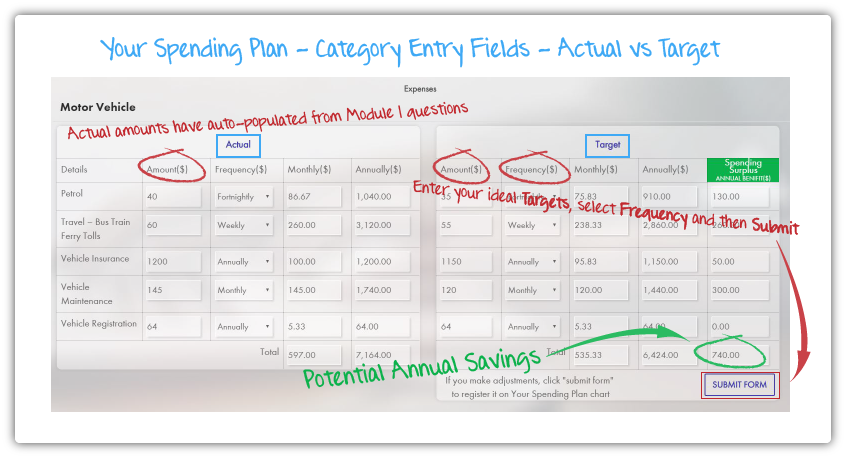
Best created on a desktop, the smart dashboard shows you what your ideal target expenses should be and once you have made some realistic changes, what your expenses target looks like.

Your Spending Plan is a living breathing document that you can, and will want to, adjust every month, if not more regularly.

If you really want to get on top of your money – control it rather than letting it control you – then you should use Your Spending Plan. It should end up saving you considerably more than it costs each month.

Do you control your money or does it control you?

Whether you are starting your financial journey out of Uni, getting your first job, climbing the career ladder, jumping into, or out of a relationship, buying property, or even starting a business, you need to take control of your financial future.

There are a heap of 'Manage Your Money' APPs and Software Platforms out there now.

They're a fantastic start for anyone that doesn't have control over their money.

They scrape your bank accounts and show you what you are spending and categorise that spending, so you roughly know what you are spending your money on.

Better to know than not to know, right?

These Apps aren't really going to let you get ahead, or save, they just help you to not overspend.

Now if you are really serious about getting on top of your money, you need to be preparing a budget of your cash-flow.

But no-one wants to create a budget. That's way too hard. Unless . . .

Your Spending Plan from Your Money Sense is a budget planning tool, stepping further into managing your spending categories than the account scraping APPs, in order to save you real money, and put more in your pocket, and even get you saving for those bigger purchases or life-event needs.

It's a step-by-step module course showing you how to gather, categorise and act on your expenses and make real savings.

Your Spending Plan is not an automated scraping tool, like the multitude of APPs out there, as the information needs to be accurate and detailed.

I won't sugar-coat it, there is manual entry required to get it started so you will need to gather your bills and expenses together.

One of the great things about the Your Money Sense course is that it guides you through each step like an easy course, so you know what to do and have plenty of time to do it.

Once your money flow is categorised you can model your expenses to see what a slight adjustment can do to affect your savings in the short, mid or long term.


Best created on a desktop, the smart dashboard shows you what your ideal target expenses should be and once you have made some realistic changes, what your expenses target looks like.

Your Spending Plan is a living breathing document that you can, and will want to, adjust every month, if not more regularly.

If you really want to get on top of your money – control it rather than letting it control you – then you should use Your Spending Plan. It should end up saving you considerably more than it costs each month.

START HERE >> www.yourwealthvault.com.au

Tuesday, 17 October 2017

The Best Way To Put More Money In Your Pocket


There are a heap of ‘Manage-My-Money’ APPs and Software Platforms out there now.

They are a fantastic start for anyone that doesn’t have control over their money.

They scrape your bank accounts and show you what you are spending and categorise that spending, however without too much detail, so you roughly know what you are spending your money on.

Better to know than not to know.

These Apps aren’t really going to let you get ahead, or save, they just help you to not overspend.


Now, if you want more than just a summary of what you have and what you've spent, you need to be preparing a budget of your cash-flow – where your money comes in from and where it goes out to.

But no-one wants to create a budget. That’s way too hard, right?

Agreed. So we've built Your Spending Plan which is an easy to use budget planning tool, stepping further into managing your spending categories than the account scraping APPs, in order to save you real money, and put more in your pocket, and even get you saving for those bigger purchases or life-event needs.

Your Spending Plan is not an automated scraping tool, like the multitude of APPs out there, as the information needs to be accurate and detailed. And driven by you, not an algorithm.

It’s a step-by-step module course showing you how to gather, categorise and act on your expenses and make real savings.


I won’t sugar-coat it, there is manual entry required to get it started so you will need to gather your bills and expenses together. One of the great things about the Your Money Sense course is that it guides you through each step so you know what to do and have plenty of time to do it.

Once your money flow is categorised you can model your expenses to see what a slight adjustment can do to affect your savings in the short, mid or long term.

Best created on a desktop, the proprietary smart dashboard shows you what your ideal target expenses should be and once you have made some realistic changes, what your expenses target looks like.


Your Spending Plan is a living breathing document that you can, and will want to, adjust every month, if not more regularly.

If you really want to get on top of your money – control it rather than letting it control you – then you should use Your Spending Plan. It should end up saving you considerably more than the $14.99 it costs to use each month.


___________________________________________________________________________

Don't forget to take our FREE Your Money Personality Quiz to determine what money means to you and how you react to it. It's enlightening!


Monday, 16 October 2017

What Does Your Spending Plan Look Like?


Whether you are starting your financial journey out of Uni, getting your first job, climbing the career ladder, jumping into, or out of a relationship, buying property, or even starting a business, you need to take control of your financial future.

There are a heap of ‘manage your money’ APPs and Software Platforms out there now.

They are a fantastic start for anyone that doesn’t have control over their money. They scrape your bank accounts and show you what you are spending and categorise that spending (however without too much detail), so you roughly know what you are spending your money on. Better to know than not to know.

These Apps aren’t really going to let you get ahead, or save, they just help you to not overspend.

Now if you are really serious about getting on top of your money, you need to be preparing a budget of your cash-flow – where your money comes in from and where it goes out to.

But no-one wants to create a budget. That’s way too hard. Unless . . .

Your Spending Plan from Your Money Sense is a budget planning tool, stepping further into managing your spending categories than the account scraping APPs, in order to save you real money, and put more in your pocket, and even get you saving for those bigger purchases or life-event needs.

It’s a step-by-step module course showing you how to gather, categorise and act on your expenses and make real savings.

Your Spending Plan is not an automated scraping tool, like the multitude of APPs out there, as the information needs to be accurate and detailed. I won’t sugar-coat it, there is manual entry required to get it started so you will need to gather your bills and expenses together. One of the great things about the Your Money Sense course is that it guides you through each step so you know what to do and have plenty of time to do it.

Once your money flow is categorised you can model your expenses to see what a slight adjustment can do to affect your savings in the short, mid or long term.

Best created on a desktop, the proprietary smart dashboard shows you what your ideal target expenses should be and once you have made some realistic changes, what your expenses target looks like.

Your Spending Plan is a living breathing document that you can, and will want to, adjust every month, if not more regularly.


If you really want to get on top of your money – control it rather than letting it control you – then you should use Your Spending Plan. It should end up saving you considerably more than the $14.99 it costs to use each month.

LEARN MORE

Wednesday, 12 October 2016

When is Too Early to Start Christmas Shopping?


Are you ready to start Christmas shopping yet? Is it too early? Are you emotionally ready yet? Can you imagine buying whatever you want: An iWatch, or even a new iPhone, that handbag you keep eyeing off as you walk past the store, a new jacket, or the latest sports shoes. Put it on your credit card, or split it over two credit cards, then it won’t seem as bad when you look at the statement.

We’ve all done it and it feels good. Coming home with bags of goodies, trying them on in secret, then when quizzed weeks later “When did you get that?” you retort “This old thing”.

Haha, they’ll never know. Surely you’ve heard the old saying that “You live up to your income”, as your pay-cheque or income rises, so does your lifestyle. There’s nothing wrong with living well.

But, and there is always a But… that one-off spending spree is very rarely a “one-off”. It is addictive and gets the pleasure endorphins pumping. “Why not do it again, next week, it was fun and there’s still credit available on the card” And on top of all that the airlines are giving you reward points! Why wouldn’t you use your card?

Did you know that Australians owe approximately $33 billion in credit card debt. Here’s an easier number: Thirty-Three Billion Dollars. Personal debt per credit card holder is $4301.00 with an average of $723.45 in interest per annum. Yikes!

For many of us refusing to use a credit card is simply not an option. Without one it’s difficult to pay bills and even make reccurring payments. So use it for that and not for shopping. What should you use for shopping and spending I hear you murmur sarcastically, Use a debit card. You can’t spend more than you have in the bank that way. You’ll find you will spend less and when you next look at your bank statement you’ll even question what you are buying and maybe start to budget.

While you’re at it, have a look at your monthly credit card statement. It shows how long it will take you to pay off your balance and how much interest you’ll pay if you only pay the minimum each month. (The short answers are “forever” and “heaps.”)

So overspending once in awhile is good for you; hopefully it shows you how addictive it can be and gets you to review the financial consequences of that binge. Although a “once-off” may not impact you that much now, think about those endorphins that are working to create a monster, and there’s nothing more destructive than a spending monster. What about all that money you are spending on short term pleasure, and could be using toward the car, or house, renovation, holiday: the big ticket items that need saving for. Shame as those would be long term memories, not just a day of short term pleasure, even if it is in the name of Christmas.

What can you do to resist the “spending-money-I-just-don’t-have” urge?

Firstly use your debit card more than your credit card. Secondly put a simple budget in place, and then you’ll know what you have to spend, and what you don’t. We like to call a budget ‘Your Spending Plan’ as that is what we are all working around: Spending.

Here’s a helpful downloadable guide to control your spending and build your savings. 6-steps to Financial Security, a Free e-book from Your Money Sense. It’s a good starting point to get you in the right mindset to manage your money.

So next time you go for a bender at the shopping centre, take a few deep breaths before walking in, and think about the long term financial goal.