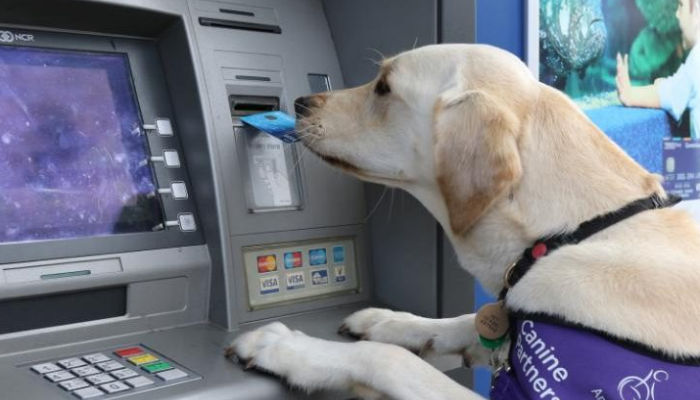
Sometimes it just doesn't take much for something to trigger an out of control wobble, right? Could be the kids, could be work, could be your partner, or a multitude of other reasons.
Do you know what the number one cause of losing control is? What gets us anxious?
It's Money.
Do you control your money or does it control you?
Whether you are starting your financial journey out of Uni, getting your first job, climbing the career ladder, jumping into, or out of a relationship, buying property, or even starting a business, you need to take control of your financial future.
There are a heap of 'Manage Your Money' APPs and Software Platforms out there now.
They're a fantastic start for anyone that doesn't have control over their money.
They scrape your bank accounts and show you what you are spending and categorise that spending, so you roughly know what you are spending your money on.
Better to know than not to know, right?
These Apps aren't really going to let you get ahead, or save, they just help you to not overspend.
Now if you are really serious about getting on top of your money, you need to be preparing a budget of your cash-flow.
But no-one wants to create a budget. That's way too hard. Unless . . .
Your Spending Plan from Your Money Sense is a budget planning tool, stepping further into managing your spending categories than the account scraping APPs, in order to save you real money, and put more in your pocket, and even get you saving for those bigger purchases or life-event needs.
It's a step-by-step module course showing you how to gather, categorise and act on your expenses and make real savings.
Your Spending Plan is not an automated scraping tool, like the multitude of APPs out there, as the information needs to be accurate and detailed.
I won't sugar-coat it, there is manual entry required to get it started so you will need to gather your bills and expenses together.
One of the great things about the Your Money Sense course is that it guides you through each step like an easy course, so you know what to do and have plenty of time to do it.
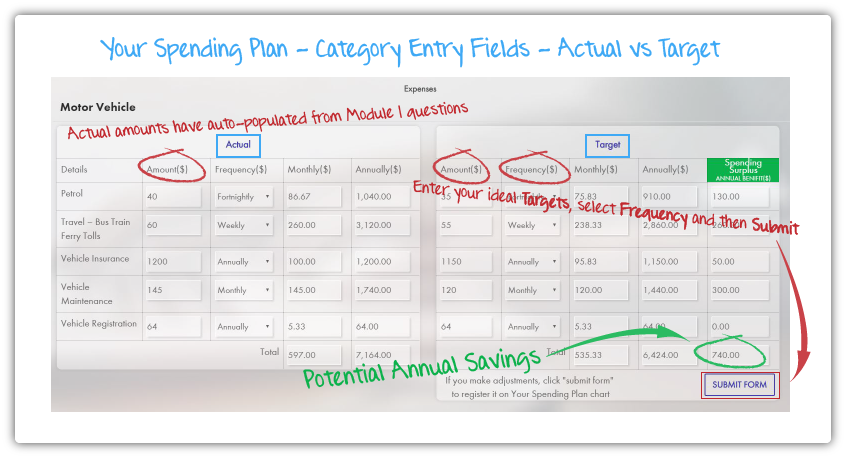
Once your money flow is categorised you can model your expenses to see what a slight adjustment can do to affect your savings in the short, mid or long term.
Best created on a desktop, the smart dashboard shows you what your ideal target expenses should be and once you have made some realistic changes, what your expenses target looks like.
Your Spending Plan is a living breathing document that you can, and will want to, adjust every month, if not more regularly.
If you really want to get on top of your money – control it rather than letting it control you – then you should use Your Spending Plan. It should end up saving you considerably more than it costs each month.
Do you control your money or does it control you?
Whether you are starting your financial journey out of Uni, getting your first job, climbing the career ladder, jumping into, or out of a relationship, buying property, or even starting a business, you need to take control of your financial future.
There are a heap of 'Manage Your Money' APPs and Software Platforms out there now.
They're a fantastic start for anyone that doesn't have control over their money.
They scrape your bank accounts and show you what you are spending and categorise that spending, so you roughly know what you are spending your money on.
Better to know than not to know, right?
These Apps aren't really going to let you get ahead, or save, they just help you to not overspend.
Now if you are really serious about getting on top of your money, you need to be preparing a budget of your cash-flow.
But no-one wants to create a budget. That's way too hard. Unless . . .
Your Spending Plan from Your Money Sense is a budget planning tool, stepping further into managing your spending categories than the account scraping APPs, in order to save you real money, and put more in your pocket, and even get you saving for those bigger purchases or life-event needs.
It's a step-by-step module course showing you how to gather, categorise and act on your expenses and make real savings.
Your Spending Plan is not an automated scraping tool, like the multitude of APPs out there, as the information needs to be accurate and detailed.
I won't sugar-coat it, there is manual entry required to get it started so you will need to gather your bills and expenses together.
One of the great things about the Your Money Sense course is that it guides you through each step like an easy course, so you know what to do and have plenty of time to do it.
Once your money flow is categorised you can model your expenses to see what a slight adjustment can do to affect your savings in the short, mid or long term.
Best created on a desktop, the smart dashboard shows you what your ideal target expenses should be and once you have made some realistic changes, what your expenses target looks like.
Your Spending Plan is a living breathing document that you can, and will want to, adjust every month, if not more regularly.
If you really want to get on top of your money – control it rather than letting it control you – then you should use Your Spending Plan. It should end up saving you considerably more than it costs each month.
START HERE >> www.yourwealthvault.com.au
Showing posts with label money management. Show all posts
Wednesday, 1 November 2017
The #1 Cause Your Spending Gets Out Of Control?
Labels:
budget planner template,
Budgeting,
Divorce,
help managing finances,
help with saving money,
home budget,
household budget planner,
how to save money,
life hacks,
money management,
my budget,
online budgeting
Location:
Australia
Tuesday, 17 October 2017
The Best Way To Put More Money In Your Pocket
There are a heap of ‘Manage-My-Money’ APPs and Software Platforms out there now.
They are a fantastic start for anyone that doesn’t have control over their money.
They scrape your bank accounts and show you what you are spending and categorise that spending, however without too much detail, so you roughly know what you are spending your money on.
Better to know than not to know.
These Apps aren’t really going to let you get ahead, or save, they just help you to not overspend.
Now, if you want more than just a summary of what you have and what you've spent, you need to be preparing a budget of your cash-flow – where your money comes in from and where it goes out to.
But no-one wants to create a budget. That’s way too hard, right?
Agreed. So we've built Your Spending Plan which is an easy to use budget planning tool, stepping further into managing your spending categories than the account scraping APPs, in order to save you real money, and put more in your pocket, and even get you saving for those bigger purchases or life-event needs.
Your Spending Plan is not an automated scraping tool, like the multitude of APPs out there, as the information needs to be accurate and detailed. And driven by you, not an algorithm.
It’s a step-by-step module course showing you how to gather, categorise and act on your expenses and make real savings.
I won’t sugar-coat it, there is manual entry required to get it started so you will need to gather your bills and expenses together. One of the great things about the Your Money Sense course is that it guides you through each step so you know what to do and have plenty of time to do it.
Once your money flow is categorised you can model your expenses to see what a slight adjustment can do to affect your savings in the short, mid or long term.
Best created on a desktop, the proprietary smart dashboard shows you what your ideal target expenses should be and once you have made some realistic changes, what your expenses target looks like.

If you really want to get on top of your money – control it rather than letting it control you – then you should use Your Spending Plan. It should end up saving you considerably more than the $14.99 it costs to use each month.

___________________________________________________________________________
Don't forget to take our FREE Your Money Personality Quiz to determine what money means to you and how you react to it. It's enlightening!
Labels:
budget planner template,
Budgeting,
Consumer Spending,
help managing finances,
home budget,
household budget planner,
life hacks,
money management,
my budget
Location:
New South Wales, Australia
Monday, 16 October 2017
What Does Your Spending Plan Look Like?
Whether you are
starting your financial journey out of Uni, getting your first job, climbing
the career ladder, jumping into, or out of a relationship, buying property, or
even starting a business, you need to take control of your financial future.
There are a heap of ‘manage
your money’ APPs and Software Platforms out there now.
They are a fantastic start for anyone
that doesn’t have control over their money. They scrape your bank accounts and
show you what you are spending and categorise that spending (however without
too much detail), so you roughly know what you are spending your money on.
Better to know than not to know.
These Apps aren’t really going to let
you get ahead, or save, they just help you to not overspend.
Now if you are really serious about
getting on top of your money, you need to be preparing a budget of your
cash-flow – where your money comes in from and where it goes out to.
But no-one wants to create a budget. That’s
way too hard. Unless . . .
Your Spending Plan from Your Money Sense is a budget
planning tool, stepping further into managing your spending categories than the
account scraping APPs, in order to save you real money, and put more in your
pocket, and even get you saving for those bigger purchases or life-event needs.
It’s a step-by-step module course
showing you how to gather, categorise and act on your expenses and make real
savings.
Your Spending
Plan is not an automated scraping tool,
like the multitude of APPs out there, as the information needs to be accurate
and detailed. I won’t sugar-coat it, there is manual entry required to get it
started so you will need to gather your bills and expenses together. One of the
great things about the Your Money Sense course is that it guides you through
each step so you know what to do and have plenty of time to do it.
Once your money flow is categorised you can model
your expenses to see what a slight adjustment can do to affect your savings in
the short, mid or long term.
Best created on a desktop, the proprietary
smart dashboard shows you what your ideal target expenses should be and once
you have made some realistic changes, what your expenses target looks like.
Your Spending
Plan is a living breathing document that
you can, and will want to, adjust every month, if not more regularly.
If you really want to get on top of
your money – control it rather than letting it control you – then you should
use Your Spending Plan. It should end up saving you considerably more
than the $14.99 it costs to use each month.
LEARN MORE
Labels:
budget planner template,
Budgeting,
Credit Card Debt,
Financial advice,
help managing finances,
home budget,
household budget planner,
life hacks,
money management,
my budget,
Online Shopping,
personal budget
Location:
Australia
Wednesday, 23 August 2017
9 Common Email & Social Media Scams
We’ve all heard about the Nigerian Prince who needs to transfer money out of the country and has selected us to send it to. Haven’t we? Phone and internet scams are all around us, in fact, they're so common that the ACCC recorded more than 105,000 scams a year, which resulted in losses of more than $84 million. That's only the ones that were reported: many more went unreported, often because the victim was too embarrassed to do so.
So to help you be on the lookout for, and hopefully avoid falling into their blackening pit of online deceit, we've put together a list of 10 most common scams.
1. The Urgent Transfer
What it looks like: You receive an email from a friend, family member or senior staff member telling you they need urgent access to funds. The story adds up (they're probably overseas and short on time). Besides, it comes from their email address and looks authentic.
What's really happening: Their email account has been compromised and you're transferring your money straight into the scammer's bank account.
What can you do to avoid it: Do not reply to that email. Create a new email to that friend and ask them if they are ok, or if you can, privately message them on social media to confirm their status.
2. The Mail That Never Came
What it looks like: That credit card you applied for never seemed to arrive.
What's really happening: Scammers accessed your letterbox and intercepted the card before you had a chance to receive it. They've changed the PIN and are now using it for themselves. In the process, they're racking up a significant debt in your name. And its not just your credit card mail they will take.
What can you do to avoid it: Put a lock on your letterbox, or use a PO Box, or at least check your mailbox regularly.
3. The Parcel Pickup
What it looks like: A postal delivery company sends you an email telling you that you have a parcel that can't be delivered. If you can't collect it within 7 days it will be destroyed. But first, you need to print off a label to redeem your package.
What's really happening: Rather than printing a label, you're actually downloading dangerous ransomware. Once it's installed, scammers can use it to lock files and even destroy them. The only way you can take back control is to pay them. Making sure your computer is regularly backed up can also help counter-effect the impact of ransomware.
What can you do to avoid it: This one is really scary as all you can do to get back control of your computer, and files, is to pay them. Think before you click on anything you aren’t sure of: Are you expecting a parcel? Why would it not have been delivered? Pick up the phone and call before clicking.
4. The Tax Refund
What it looks like: You receive an email from a government agency advising you of a tax refund. To receive it, all you need to do is follow the link to your bank and enter your account details.
What's really happening: The link takes you to a fake site set up by the scammers. Instead of giving your account details – and internet banking password – to your bank, you're actually delivering this vital information straight into the scammer's hands.
What can you do to avoid it: Unless you are instigating a transfer, never put your bank account details into any site you are not sure of.
5. The 'Free' WiFi
What it looks like: You're at the airport or hotel and need to connect your laptop or mobile to the internet. When you search for a connection, you're in luck. There's a free hotspot right nearby.
What's really happening: You've actually just connected to a fake network. This allows a scammer to intercept all network traffic and steal your personal information. And the pain doesn't stop there. From now on, every time you turn on your device, you could be transmitting the same 'free' wifi to other unsuspecting users.
What can you do to avoid it: You should only connect to wifi that you know is legitimate and, if in doubt, pay to access a secure network. You should also make sure your anti-virus software is up to date and your firewall is turned on.
6. The Unrealistic Job Offer
What it looks like: You respond to an advertisement that promises you'll earn good money from the comfort of your home as an 'accounts processor'. All you need to do is set up a bank account and forward any money that comes into it, onto another account. You even get a cut of each transaction for your troubles.
What's really happening: You're being used by fraudsters as a “money mule”: an everyday person with no criminal history through whose bank account they'll move the proceeds of crime.
What can you do to avoid it: This is money laundering, done by organized crime, and you can be implicated and go to jail. Easy money doesn’t exist. Check, research, and qualify before you go the easy route.
7. The Speeding Fine
What it looks like: A government body/law enforcement agency, emails you to tell you that your vehicle has been caught speeding. You need to download the photo they've taken to confirm you were driving.
What's really happening: The link you click on downloads ransomware to your computer. You'll have to pay the scammers to get back the files they encrypt.
What can you do to avoid it: Same as #3, this is hard to back out of and will end up costing you a lot of money. Do your research before you click on things you are not sure of.
8. The Computer Problem
What it looks like: You receive a call from your internet service provider. They've detected a virus on your computer and it's sending error messages. The good news is that they can fix it, so long as you give them remote access.
What's really happening: You've handed control of your computer to a scammer. They'll probably try to steal your personal data or hold your computer to ransom until you pay.
What can you do to avoid it: Never hand over remote access to anyone! If it’s that bad, take it to the service providers storefront and ask them about it.
9. The Store Voucher
What it looks like: A well-known brand uses its social media account to post that it's giving away gift vouchers or free flights or another very attractive perk. To claim your prize, all you need to do is like the post. Like this photo, or share it if it tugs on your heartstrings, or type Amen then share, or type the solution then like.
What's really happening: You've fallen victim to a 'like farming' scam. The page isn't authentic but has been set up by a scammer who's trying to get as many likes as possible. They'll on-sell these likes - and your profile - to other fraudsters, who will start pushing spam posts in an effort to get hold of your credit card data.
What can you do to avoid it: Oh this is so common! If it’s not a friends post or a known source, stay away, don’t get sucked in by emotions or because you think you are clever enough to know the answer.
AND THAT”S JUST THE BEGINNING . . .
As the world becomes alert to the prevalence of scams, scammers are responding by becoming more creative. So, as these 9 scams start to become less effective, it's likely that newer and more sophisticated ones will take their place.
RULE OF THUMB
Email: Don’t open or download any links or attachments that you are unsure of. Research them prior to doing so. Get on the phone and check the source. Some emails may seem to come from a reputable name YourFriend, but when you click on that from name, you will find the real source: YourFriend <dodgysource@evendodgiercompany.com>
Social Media: Only respond to known posts – friends and businesses that are familiar to you.
This list was prepared by Your Money Sense where you can find out what your emotional attachment to money is and how to overcome and manage it. (We all have an emotional attachment to money)
Wednesday, 16 August 2017
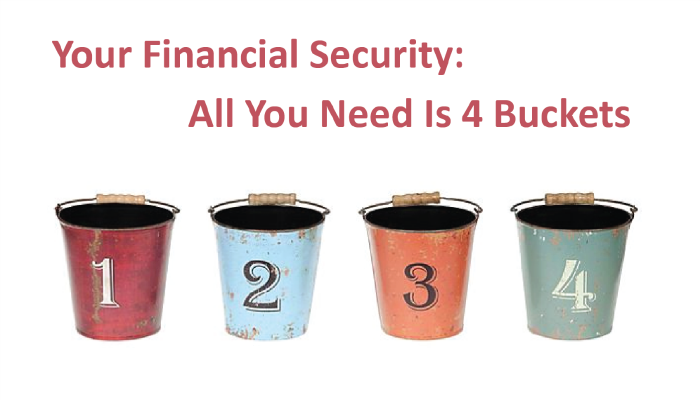
Financial Security? All You Need Is 4 Buckets
If you want to build or maintain a healthy
financial life, budgeting should be your fundamental starting point. After all,
how can you tell you’re on track if you don’t know where your hard-earned
pay-cheque is going?
Some of us, correction: most of us, will find it
daunting to maintain a budget. Getting all your expenses together, tracking
what should be paid and when, how much you have left for entertainment, saving
for long-term goals – it’s enough to make you give up before you
start. But what if there was an easier way to manage your cash-flow that
didn’t require hours of sifting through receipts or crunching numbers?
There is and it’s not that hard to get started. It
starts with categorising your monthly spending into four buckets:
BUCKET ONE Fixed costs. These are bills that
don’t fluctuate much and remain pretty constant each week or month, or whatever
period they are relevant to: things like rent or mortgage, a phone bill or your
car payment. It also includes essential costs that may vary slightly from month
to month, like utility bills such as electricity or water. Although they may
vary slightly, you can work out an average for the purpose of this budget. But
generally speaking, if you can predict how much an expense will be, it belongs
in this category.
BUCKET TWO Financial goals.These include any
sort of savings or debt goal you’re trying to work towards every month, whether
that’s paying off credit card balances, paying down your student loans, saving
for a home or paying into an emergency fund regularly, or topping up your Super
on a regular basis.
~
Take the FREE Money Personality Quiz to determine your emotional
attachment to money ~
BUCKET THREE Non-monthly expenses.Got a bill
that you have to pay at some point every year, but just not every month? This
could include your home or car insurance or for that matter, most annual
insurances, car registration fees, annual health payments, and even school
tuition belongs in this category. Add up what those types of costs total to
each year, then divide that total by 12. That should be what you’re setting
aside each month to cover those expenses when they come up.
BUCKET FOUR Flexible spending.This category
covers all those everyday costs that fluctuate each month. This can include
groceries, restaurants, shopping, movies, petrol and pretty much any expense
that may vary month to month.
So now that you’ve categorized your costs, how much
can you actually flexibly spend each month without blowing your
budget? Well, that’s a relatively easy calculation. What is your monthly
take-home pay? From that, subtract your total fixed costs, and your financial
goal contributions, and those non-monthly expenses you calculated. The amount
that’s left over is what’s available to cover your flexible spending – the
daily coffees, new shoes, magazines, etc.
If you want to know what your flexible spending is
per week just divide your monthly figure by 4.3, and you’ll have your weekly
spending number to stick to. So if you work out the above, and stick to it, you
won’t be in danger of spending more than you earn.
If you can put your hands on the numbers from your
bills, it’s not that hard to work out. And if you can work to a budget each
week or month, you’ll certainly be on your way to building a financially secure
future.
If you want some more great advice about securing your financial future
start by finding out your emotional attachment to money and how to
overcome and manage it by taking the Free Your Money
Personality Quiz.
Labels:
Budgeting,
Consumer Spending,
Credit Card Debt,
Financial advice,
money management,
Savings,
Shopping,
Spending
Location:
Australia
Wednesday, 21 September 2016
Should you keep money under the mattress?
If you want to build or
maintain a healthy financial life, then keeping your money in your mattress is probably
not the best place to start. Budgeting however, should be your fundamental
starting point. After all, how can you tell you’re on track if you don’t know
where your hard-earned pay-cheque is going?
Some of us, correction:
most of us, will find it daunting to maintain a budget. Getting all your
expenses together, tracking what should be paid and when, how much you have
left for entertainment, saving for long-term goals – it’s enough to make you
give up before you start. But what if there was an easier way to manage
your cash-flow that didn’t require hours of sifting through receipts or crunching
numbers?
There is and it’s not
that hard to get started. It starts with categorising your monthly spending
into four buckets:- Fixed costs. These are bills that don’t fluctuate much and remain pretty constant each week or month, or whatever period they are relevant to: things like rent or mortgage, a phone bill or your car payment. It also includes essential costs that may vary slightly from month to month, like utility bills such as electricity or water. Although they may vary slightly, you can work out an average for the purpose of this budget. But generally speaking, if you can predict how much an expense will be, it belongs in this category.
- Financial goals. These include any sort of savings or debt goal you’re trying to work towards every month, whether that’s paying off credit card balances, paying down your student loans, saving for a home or paying into an emergency fund regularly, or topping up your Super on a regular basis.
- Non-monthly expenses. Got a bill that you have to pay at some point every year, but just not every month? This could include your home or car insurance or for that matter, most annual insurances, car registration fees, annual health payments, and even school tuition belongs in this category. Add up what those types of costs total to each year, then divide that total by 12. That should be what you’re setting aside each month to cover those expenses when they come up.
- Flexible spending. This category covers all those everyday costs that fluctuate each month. This can include groceries, restaurants, shopping, movies, petrol and pretty much any expense that may vary month to month.
So now
that you’ve categorized your costs, how much can you actually flexibly spend each month without blowing your
budget? Well, that’s a relatively easy calculation. What is your monthly
take-home pay? From that, subtract your total fixed costs, and your financial
goal contributions, and those non-monthly expenses you calculated. The amount
that’s left over is what’s available to cover your flexible spending – the
daily coffees, new shoes, magazines, etc.
If you want to know what
your flexible spending is per week just divide your monthly figure by 4.3, and
you’ll have your weekly spending number to stick to. So if you work out the
above, and stick to it, you won’t be in danger of spending more than you earn.
If you
can put your hands on the numbers from your bills, it’s not that hard to work
out. And if you can work to a budget each week or month, you’ll certainly be on
your way to building a financially secure future. If you want some more great
advice about securing your financial future, Here’s a great Free
e-book from Your Money Sense: 6-steps to Financial Security
Tuesday, 6 September 2016
10 Things To Do To Change Your Life Forever
We are surrounded by change, and the more you resist, the
tougher life gets. Accept change, look at it as an opportunity to try new
things, to meet new people, to challenge you.
Change can come upon us by way of unexpected events or by
choice. It’s inevitable so grab it with two hands and see where it takes you.
1 Be Happy
What makes you happy? Really, happy. Is it a person, is it
an activity? Think about that true happiness and find ways to get involved and
follow through to get more of that happiness. Without true happiness you will
go through life wondering what could have been.
2 Create a Dream Board
Some people think it’s corny, some swear by them. Cut out
pictures of things you want, and things you want to achieve, and stick them on
a big sheet of paper, or a small one if you aren’t making it public. It’s a
visual reminder of what make you happy and what to strive for. If you don’t
want to make it publically visible, keep it in a draw that you use frequently –
that way it’s out of sight but a constant reminder to you of what you want to
change in your life.
3 Set Goals To Achieve
Your Dreams
Now that you have worked out what your dreams are on your
dream board: Holiday, better job, nicer car, get married, have children,
retire, etc etc – you need to take action to put these goals in place. Set up
short, medium, and long term goals. And then act on them, and that is what will
make it happen. If they all don’t turn out, keep at it, or adjust your goals.
4 Let Go Of Your
Regrets
Don’t hold back and don’t let anything hold you back.
Regrets and negative feelings of what could have been have a tendency to be
internalized, upsetting the balance of your gut and brain, and can lead to
sickness. Be positive, move forward – history is history.
5 Do Something Out Of
Your Bubble
Unless you try something new, out of your comfort zone, you’re
never going to give anything a go. You’ll be living in your same old bubble,
week in week out. It doesn’t have to be bungy jumping, but something that
you’ve thought about but never had the gumption to go and try: make a speech in
front of people; start walking to lose weight; go out on a girls night out now
and then. It can be anything you don’t do now. Make a change to try something
new.
6 Start Living A Well
Balanced Life
You need your body and mind to be working together. Unless
you look after your body, your mind won’t be clear. Exercise is the best way to
clear your head and gain a positive attitude. It’s amazing what you start
thinking about if you go for a run, or even a walk,: it’s not the negative
stuff, it’s what you need to do, the positive things. Make a change and try it.
7 Face Your Fears
It’s easy to brush off our fears in the hope that they will
go away and we won’t have to do anything about them. Your fears are only
thoughts on your mind, they’re not real, but they manifest over time and then
we believe them to be real. We need to take control of these fears – mind over
matter – and not let them control us. Have positive thoughts and move forward.
8 Accept Yourself
You are who you are. You are a combination of genetics and
environment. Everyone has something that they would like to change about
themselves – if they are truthful and think hard about it. The only person that
can make that change is you. A negative attitude to your, let’s call them
‘self-faults’ is only going to make them worse. You need to be positive and
want to change, and then you will.
9 Live In The Moment
Don’t dwell on yesterday; don’t be negative if you have a
bad event or thought. Negativity only breeds negativity. Be positive and live
in the moment, live for what will be, not what has been. The grass may be
greener on the other side of the fence, but the only way you will know is if
you make the effort to jump the fence. If it’s not greener when you get there,
you’ve learned a good lesson and can keep moving forward anyway.
10 Show Gratitude
If you are grateful for what you have and what you can
change, then good things will happen and you will see your life change. Your
changes don’t need to be monumental, they may be small, but they are still
changes, and hopefully changes for the better.
Change you attitude
to change.
About the author: Karen Vickers is a Financial Adviser who
wants people to learn how to take control of their money. You can also change
your financial habits. A good start to understanding
the financial habit change process is by downloading our Free Your Money Sense e-Book http://yourwealthvault.com.au/: “6-steps to Financial Security”.
Location:
Australia
10 Things To Do To Change Your Life Forever
We are surrounded by change, and the more you resist, the
tougher life gets. Accept change, look at it as an opportunity to try new
things, to meet new people, to challenge you.
Change can come upon us by way of unexpected events or by
choice. It’s inevitable so grab it with two hands and see where it takes you.
1 Be Happy
What makes you happy? Really, happy. Is it a person, is it
an activity? Think about that true happiness and find ways to get involved and
follow through to get more of that happiness. Without true happiness you will
go through life wondering what could have been.
2 Create a Dream Board
Some people think it’s corny, some swear by them. Cut out
pictures of things you want, and things you want to achieve, and stick them on
a big sheet of paper, or a small one if you aren’t making it public. It’s a
visual reminder of what make you happy and what to strive for. If you don’t
want to make it publically visible, keep it in a draw that you use frequently –
that way it’s out of sight but a constant reminder to you of what you want to
change in your life.
3 Set Goals To Achieve
Your Dreams
Now that you have worked out what your dreams are on your
dream board: Holiday, better job, nicer car, get married, have children,
retire, etc etc – you need to take action to put these goals in place. Set up
short, medium, and long term goals. And then act on them, and that is what will
make it happen. If they all don’t turn out, keep at it, or adjust your goals.
4 Let Go Of Your
Regrets
Don’t hold back and don’t let anything hold you back.
Regrets and negative feelings of what could have been have a tendency to be
internalized, upsetting the balance of your gut and brain, and can lead to
sickness. Be positive, move forward – history is history.
5 Do Something Out Of
Your Bubble
Unless you try something new, out of your comfort zone, you’re
never going to give anything a go. You’ll be living in your same old bubble,
week in week out. It doesn’t have to be bungy jumping, but something that
you’ve thought about but never had the gumption to go and try: make a speech in
front of people; start walking to lose weight; go out on a girls night out now
and then. It can be anything you don’t do now. Make a change to try something
new.
6 Start Living A Well
Balanced Life
You need your body and mind to be working together. Unless
you look after your body, your mind won’t be clear. Exercise is the best way to
clear your head and gain a positive attitude. It’s amazing what you start
thinking about if you go for a run, or even a walk,: it’s not the negative
stuff, it’s what you need to do, the positive things. Make a change and try it.
7 Face Your Fears
It’s easy to brush off our fears in the hope that they will
go away and we won’t have to do anything about them. Your fears are only
thoughts on your mind, they’re not real, but they manifest over time and then
we believe them to be real. We need to take control of these fears – mind over
matter – and not let them control us. Have positive thoughts and move forward.
8 Accept Yourself
You are who you are. You are a combination of genetics and
environment. Everyone has something that they would like to change about
themselves – if they are truthful and think hard about it. The only person that
can make that change is you. A negative attitude to your, let’s call them
‘self-faults’ is only going to make them worse. You need to be positive and
want to change, and then you will.
9 Live In The Moment
Don’t dwell on yesterday; don’t be negative if you have a
bad event or thought. Negativity only breeds negativity. Be positive and live
in the moment, live for what will be, not what has been. The grass may be
greener on the other side of the fence, but the only way you will know is if
you make the effort to jump the fence. If it’s not greener when you get there,
you’ve learned a good lesson and can keep moving forward anyway.
10 Show Gratitude
If you are grateful for what you have and what you can
change, then good things will happen and you will see your life change. Your
changes don’t need to be monumental, they may be small, but they are still
changes, and hopefully changes for the better.
Change you attitude
to change.
About the author: Karen Vickers is a Financial Adviser who
wants people to learn how to take control of their money. You can also change
your financial habits. A good start to understanding
the financial habit change process is by downloading our Free Your Money Sense e-Book http://yourwealthvault.com.au/: “6-steps to Financial Security”.
Location:
Australia
Tuesday, 30 August 2016
If you change this habit you’ll quickly improve your financial situation?
Change your habit; the habit of
spending. Firstly you need to learn how to save on small things. Saving,
spending, they go hand in hand. This is probably the fastest and easiest way to improve your financial situation. We’re
not always fully aware about the money we spend on certain daily habits. Habits
are a very strange thing. They just happen time and time again, and generally subconsciously.
If you put a value on each time you
‘do’ a habit it ends up costing a small fortune. If you go to the same coffee
shop day in and day out: that’s a habit. Drinking coffee in a local coffee shop
on a daily basis drains your monthly budget. How can you break that habit? Well
that’s not for us to say, but we’ll give it a go anyway. We know you need your
coffee, but just consider how it gets into the cup. Maybe pick up a home coffee
machine, or get one at work, they really do produce great coffee these days and
cost cents on the dollar. Try taking a bottle of water with you so you might
sip on that rather than get a coffee for the sake of it.
How much electric energy or water
are you using each day? It’s not one of those free resources that are just
there like air, it costs money. If the weather outside is not very hot, you
don’t need to use the air conditioning and vice versa, if it is not very cold
you can turn off or set the heating at a lower temperature. If no one is
watching TV or if no one is working on the computer, turn them off, or power
them down. Make sure that the taps are turned to the end and don’t let the water
run unnecessarily. Have a 10 minute shower instead of a 30 minute shower. It
all costs money and if you adjust the way you do or use these things, they’ll
end up saving you money.
This has nothing to do with
skimping – it’s just a case of thinking what it is costing you unnecessarily, and
then adjust your habit. By cutting down on some of those habits, you’ll have
reasonable savings by the end of a few months.
No-one is saying “don’t do that
anymore” but if you’re honest with yourself you know there are many, many, more
“habits” that you could adjust. A slight adjustment will save you a lot of
money over the course of a month.
So do you know what the fastest
way to improve your financial situation is yet? Habit: Change: Adjustment:
Realigning; any of those will cover it.
What habit do you need to change?
A good start
to understanding the habit change process is by downloading our Free Your Money Sense e-Book: “6-steps to Financial Security”.
Labels:
Budgeting,
Financial advice,
money management,
Savings,
Shopping
Location:
Australia
Wednesday, 24 August 2016
The
Association of Financial Advisers (AFA) and TAL have announced the
semi-finalists in the 2016 AFA Female Excellence in Advice Award.
Developed in
2011 as a joint initiative by the AFA and TAL, the Award recognises and
showcases the talents and contributions of women in financial advice to their
clients, community and profession. The Award criteria includes assessment of
the candidates’ contributions to financial literacy in the community and/or
campaigns targeted specifically at helping female clients take control of their
financial lives.
AFA CEO,
Brad Fox, said the Award is a reflection of the AFA’s commitment to continue to
generate and encourage positive change in the financial advice sector, with
women constantly being encouraged to enter the advice profession.
“The AFA is immensely proud of this Award, the calibre of
entrants it attracts, and ultimately the finalists and in particular the
winner. Our profession is going through significant change, and to see more
women advisers coming through providing great advice to Australians is very
important from a diversity perspective.”
When asked about her business and
contribution to the financial services industry, Karen Vickers proudly
explained, “My primary business is ARC Wealth, a financial advisory service to an
established core of clients. From the strength and security of ARC Wealth I am
building an online platform, Your Wealth Vault, which educates and guides people
through a series of educational courses called Your Money Sense. These courses are aimed at guiding
individuals to take ownership of their financial security, through courses of
basic understanding of their money and then onto more sophisticated courses
guiding them to their own financial management and wealth building.”
Your Wealth Vault courses are
designed to help Australians understand how their money works and what they can
put in place to manage their finances whether that is for day to day survival,
or wealth creation.
The finalists for the AFA Female Excellence in Advice Award
winner will be announced at the AFA National Adviser Conference in Canberra
from 5-7 October.
Labels:
Budgeting,
Estate Planning,
Financial advice,
Financial services,
money management,
Retirement,
Savings
Location:
Australia
Tuesday, 9 August 2016
The average cost of your pet per year is . . .
They’re our four
legged-friends, our furry family members and our instant mood-boosters after a
particularly stressful day. We love our pets—so much that most Australians
consider their cat or dog to be another member of the family. And they can be
pretty expensive family members, at that.
A dog’s life certainly isn’t
cheap anymore, with Australian families spending more than $25,000 on their pet
dog over its life-time, according to a report by Bankwest. Apparently the
average Aussie family can end up spending more than $25,000 over the life of
their beloved friend.
Over the average lifespan of a
dog, roughly ten years, pet food and other gourmet delights can gobble up the
bulk of a doggies annual food bill at about $1200. Then there are veterinary
costs, and additional dog care such as grooming, dog walking, dietician and
trainer costs each year.
It certainly isn’t any
surprise to learn that half of Aussie pet owners consider their pet to be
equally important as their kids. If you are prepared to outlay more than $25k
for your dog then you’d probably love him.
Most pet owners think the cost
of a pet dog is a small price to pay in return for what a dog provides its
family. Their love for dogs, the companionship provided by a ‘man’s best
friend’ and the peace of mind and security a pet canine creates are the main
reasons for owning a dog.
Interesting facts about our pets:
·
NSW is the state that spends the most on pets.
WA spends the least.
·
25 per cent of Aussie dog owners pay a dog
groomer to maintain their dogs’ appearance.
·
50 per cent of Aussie dog owners buy their dog
gifts for special occasions e.g. Birthday, Christmas etc.
·
80 per cent of Aussie dog owners have a dog for
companionship
·
Over 30 per cent of dog owners have a dog to
encourage them to exercise.
·
5 per cent of people have their pets in their
will.
·
8 per cent of people take their pet with them on
holiday
Yes we love our pets
– that’s a given. But these costs can cause some major strains on your
household budget. If you are looking to bring a pet into your household, planning
should be a top priority. Knowing the costs associated with your pet and being
prepared for unexpected and emergency costs will help diminish the financial burden
of your new furry friend.
Owners can help avoid
future financial mishap by doing their homework before bringing home a new cat
or dog. Just as you should have a personal, or business budget in place, your
pets should be a factor in that budget.
If
you still need to “get-around-to” starting a budget you can start here by
downloading our Free Your
Money Sense e-Book: “6-steps
to Financial Security”.
Did you know Australia is a nation of dog rather than cat owners with
68 per cent of pet owners having a dog and 32% having a cat. What are you?
Labels:
Budgeting,
Financial advice,
money management,
Pet costs,
Spending
Location:
Australia
Subscribe to:
Posts (Atom)